Intune Suite endpoint management is now integrated into Microsoft 365 E5.



For many organizations, this shift will simplify budgeting, procurement and platform planning.

Capabilities once fragmented across licenses and tools are being brought into a single system.
Microsoft has changed what "standard" endpoint management looks like inside Microsoft 365, most notably through what is now included with Microsoft 365 E5. By folding the full Intune Suite directly into E5, Microsoft is pulling capabilities out of add-ons and third-party tools and placing them into its primary endpoint platform, expanding Intune’s scope and materially changing the economics of managing devices at scale. This shift reflects broader market readiness, as organizations look to reduce tool sprawl and operational overhead rather than add new layers of complexity.

Security Copilot doesn’t give Intune new powers; it makes what Intune already does much more accessible. Instead of writing complex queries, you can tell it what you want in natural language, and it handles the rest. That’s a huge force multiplier for IT teams.
Phil Heather, Modern Work Solution Leader, RSM US LLP
What distinguishes E5 is not just the inclusion of more capabilities, but a different operating model. With Security Copilot included, endpoint administration shifts away from scripts, queries and specialized tooling toward artificial intelligence‑assisted workflows that surface insight, guide investigation and reduce manual effort. For organizations already invested in Microsoft 365, this has immediate implications for how endpoint tools are consolidated, how staff time is allocated and how quickly teams can respond to issues across increasingly diverse device environments.
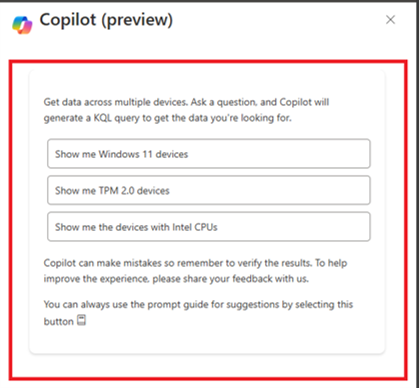
Security Copilot allows administrators to query device status using natural language, reducing reliance on custom scripts and complex queries.
Who benefits most from E5 consolidation?
The Intune licensing changes and the inclusion of Security Copilot reflect a consolidation that directly affects how IT and security leaders manage endpoints, costs and operational effort. The impact will be felt most quickly in E5 environments supporting large, distributed device estates—particularly in professional services, healthcare, financial services, manufacturing, education and the public sector. The effects of this evolution will be significant, especially for:
- Chief information officers and heads of IT evaluating endpoint strategy, licensing value and operating models as Intune absorbs capabilities previously delivered through add‑ons or third‑party tools
- Endpoint and workplace technology leaders responsible for device management, user support and platform standardization across increasingly diverse device environments
- Security and identity leaders (chief information security officers, SecOps) focused on “zero trust” enforcement, privilege management, audit readiness and reducing risk without increasing operational overhead
- Midmarket and enterprise organizations (more than 500 endpoints) managing tool sprawl, staffing constraints and the growing complexity of supporting distributed workforces at scale

The No. 1 piece of feedback we’ve heard from customers is that Intune Suite was simply too expensive. It’s a solid solution, but the price point made it hard to adopt. Including it in E5 changes the value proposition and makes these capabilities accessible to far more organizations.
Jonathan Blaue, Microsoft Strategy and GTM Leader, RSM US LLP
What E3 adds—and why E5 changes the operating model
The July 2026 licensing update expands Microsoft 365 E3 with Intune Plan 2, Remote Help and Advanced Analytics. Microsoft 365 E5 goes further by absorbing the full Intune Suite into the core license, consolidating capabilities that were previously delivered through add‑ons or third‑party tools.
| Capability area | Microsoft 365 E3 | Microsoft 365 E5 |
|---|---|---|
| Core device management | ✅ Included | ✅ Included |
| Advanced device scenarios (Intune Plan 2) | ✅ Included | ✅ Included |
| Remote support | ✅ Included | ✅ Included |
| Advanced endpoint analytics | ✅ Included | ✅ Included |
| Mobile app tunneling | ✅ Included | ✅ Included |
| Specialty devices and firmware updates | ✅ Included | ✅ Included |
| Security Copilot | — | ✅ Included |
| Privilege management | — | ✅ Included |
| Enterprise app catalog | — | ✅ Included |
| Microsoft Cloud PKI and certificates | — | ✅ Included |
For many organizations, this shifts endpoint management from a series of incremental add‑on decisions to a capability already accounted for within core Microsoft 365 licensing, simplifying budgeting, procurement and longer‑term platform planning.
Intune Suite does not replace core Intune; instead, it completes it, addressing long‑standing gaps in support, privilege control, application packaging and analytics.
From point solutions to a single control plane
What used to be a series of separate tools and procurement decisions is coalescing into a single, cloud‑native control plane. For IT teams, that shift has three immediate effects:
- Unifies endpoint management into a single platform, reducing reliance on third‑party point solutions for support, privilege control, application deployment and analytics
- Standardizes policy enforcement across the device estate, enabling consistent controls for Windows, macOS, iOS, Android and specialized devices
- Simplifies operations while strengthening security and compliance, improving audit readiness and reducing reliance on manual evidence collection to support zero-trust access models based on real‑time device health and compliance signals
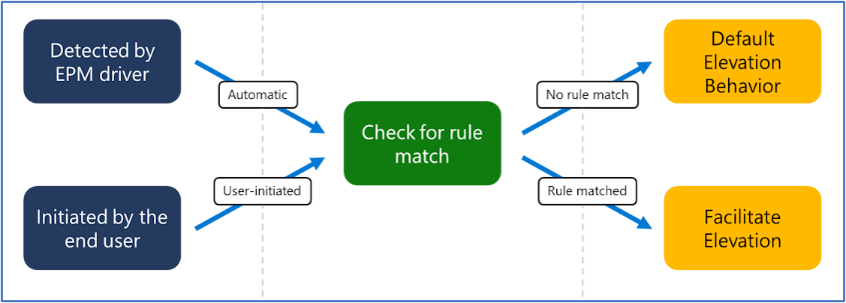
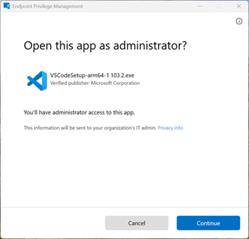
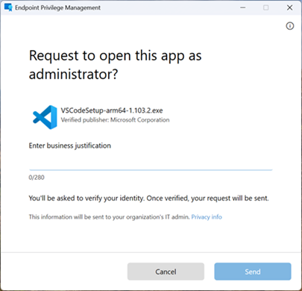
Endpoint Privilege Management enables just‑in‑time elevation for specific actions, reducing the risk of broad local administrator access while maintaining centralized control.
Security Copilot brings AI‑driven operations to Intune
Security Copilot introduces a new way of working inside Intune and across Microsoft’s security stack. Included with Microsoft 365 E5, it enables administrators to surface insights and act using natural language.
In practice, that means queries that once required deep technical fluency, such as “Identify devices without TPM enabled” or “Isolate systems that failed recent updates,” can now be asked directly and answered with actionable results. This lowers dependency on specialized scripting skills and shortens the time required to investigate and respond to common endpoint issues.
Security Copilot surfaces advanced capabilities through guided, natural‑language assistance. For example, Intune Copilot can:
- Generate device queries from plain‑language prompts
- Assist with dynamic group creation
- Translate intent into policy and configuration settings
Across Entra, Defender and Purview, first‑party agents support:
- Conditional access optimization
- Phishing triage and investigation
- Data loss prevention analysis
- Sensitive data discovery and risk assessment
These agents are designed to assist rather than automate by default. They analyze conditions, offer recommendations and provide context, while leaving final decisions and actions with human operators.
The takeaway: What the Intune shift means in practice
The Intune licensing changes and the inclusion of Security Copilot reflect a deliberate consolidation that organizations will begin to feel as licensing updates take effect. Capabilities once fragmented across licenses and tools are being brought into a single operating approach, reducing tool sprawl and the need for custom workarounds.
For organizations already invested in Microsoft 365, this shows up in daily operations. Intune is no longer limited to enrollment and baseline policy. It is becoming the place where endpoint configuration, access decisions, support actions and security investigation converge, with Security Copilot lowering the effort required to move between those tasks.
RSM can help assess your current endpoint environment, identify where Intune and Copilot create the greatest operational impact, and apply those capabilities in ways that improve control without adding complexity.