Digital transformation and the demand for data are key drivers of the outsourcing trend.

Key takeaways


Outsourcing provides a critical solution for the scarcity of certified public accountants.

Three popular outsourcing models are traditional outsourcing, co-sourcing and lift-outs.
The real estate industry focuses on outsourcing
Outsourcing as a business strategy is rapidly becoming the standard across the real estate industry, capturing the attention of executives by providing solutions for tax services, fund administration, property accounting, managed technology, staff augmentation, internal audit, and a variety of other solutions. Outsourcing to a third party may result in cost savings, efficiency, scalability, a reduction in overhead, risk mitigation, technical expertise, technological advancements, protection against turnover, and also help companies achieve regulatory or financial compliance. While the ultimate responsibility for operational functionsdeliverabledeliverables remain with the company, beoutsourcing has become an effective strategy to achieve business goals within the real estate industry.
Among the factors driving the trend toward outsourcing is the global move towards digital transformation. Real estate investment advisers have prioritized implementing technology tools in response to the call for greater transparency into investment performance and operations. Implemented accurately, the right technology will provide clarity of investments and operations, a growing theme across the industry highlighted by the Securities and Exchange Commission’s ongoing efforts to enhance the regulation of private fund advisors.
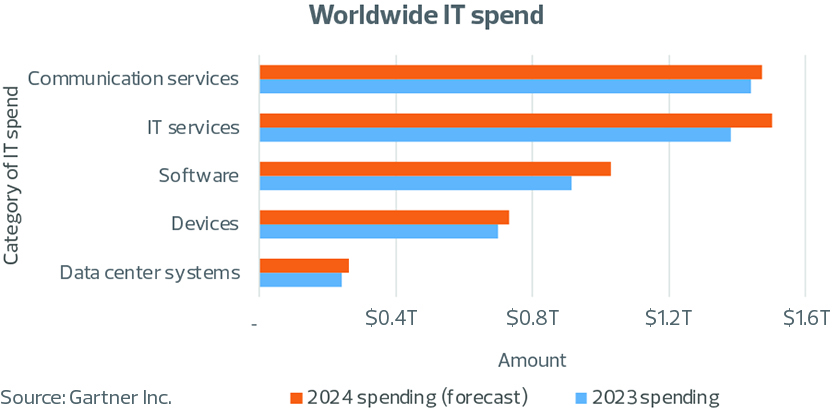
Further, cyber risk is a constant and evolving battle that has been complicated by the proliferation of generative artificial intelligence, increasing the need for real estate companies to embrace emerging technologies as a means to stay one step ahead of bad actors. As a result, worldwide spending on information technology resources is expected to total $5 trillion in 2024, an increase of 6.8% from 2023, according to the latest forecast by Gartner, Inc.
The real estate industry focuses on outsourcing
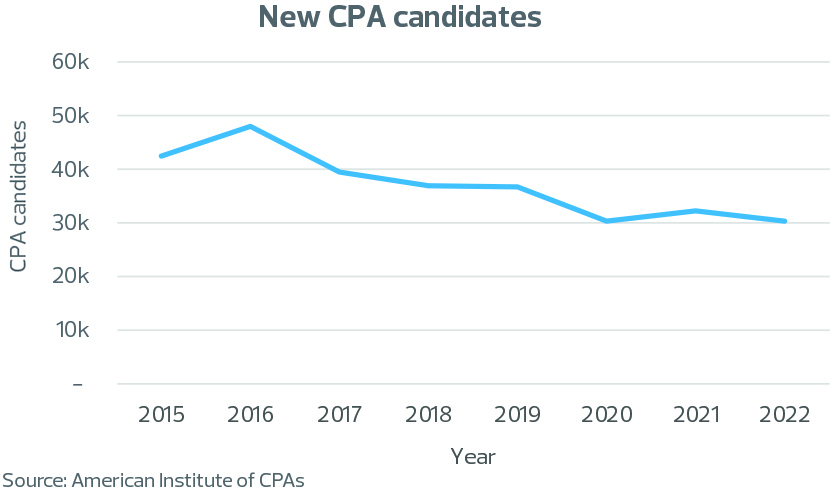
Another driving factor of outsourcing is the growing scarcity of certified public accountants. A catalyst for the decline has been the 150-hour requirement to obtain a CPA license, which was re-instated in August 2008. The correlated increase in student debt, modest starting salaries, long hours and required office work have all contributed to waning interest in the accounting profession. The industry is seeking alternative strategies across statutory jurisdictions to help ensure a greater supply of accounting professionals in the future.
The real estate industry focuses on outsourcing
Types of outsourcing
Outsourcing, in the traditional sense, is the business practice of engaging a third party to perform functions traditionally done in-house. A common example is when a third-party functions as the tax department of a company, taking ownership of all regulatory filings and adding a network of advisors to provide structuring, investment analysis and local or international support. The outsource model for tax compliance enables real-time decision making and expert guidance around real estate transactions. After technical expertise, arguably the most influential reason for outsourcing is the opportunity to access technology to capture data not currently available, which can help companies analyze deals or make investment decisions. Outsourcing may also help companies mitigate cybersecurity risk or streamline a path toward regulatory compliance.
A variation of outsourcing gaining more commonality in real estate is co-sourcing, which is when a company and third-party consultant work together to complete a task or function. Co-sourcing is a hybrid model where professional resources are outsourced but the technology is insourced. In simple terms, when the consultant logs in and utilizes the company’s instance of technology. Common examples include fund administration or financial accounting outsourcing. The real estate industry [BM1] is no stranger to co-sourcing; however with evolving regulations, the heightened value of data, and the need for technical experience, the demand for this strategy has soared.
Similar to outsourcing, a lift-out is when a consultant hires employees of a company to deliver professional services more efficiently back to the company. The consultant is typically better resourced and bolstered by the technology and technical knowledge to holistically support the company. In hiring multiple employees from the same organization, the team onboarded can maintain the company’s culture by readily adapting to their new environment. With lift-outs, the company may have the opportunity to shift relating overhead expenses of the management company to the investors. The strategy can also benefit the consultant, by providing specific talent or technological experience. In performing a lift-out, the consultant captures historical knowledge of the company, its operations and strategy.
Considerations for outsourcing
There are business cases that support each outsourcing model described above. Heighted interest rates and increasing salaries, employee benefits, onboarding expenses and placemat fees have created challenges for the real estate industry. Depending on a company’s organizational structure and contractual agreements, outsourcing expenses may be pushed through to investors, unlike traditional employment expenses which are expensed as overhead to the company. The cost to investors is often embraced, as outsourcing offers a level of independent oversight and transparency. However, legal organizational agreements may restrict certain types of outsourcing services, and further, tax regulations vary by jurisdiction, so it’s essential to consult with a professional service provider to ensure compliance.
For many real estate companies, technology integration and syncing disparate data can be complex and expensive, but it is critical for generating accurate data visuals for analysis and overall decision making. It is certainly more common now to have property managers or fund administrators operate within investment managers instance of technology. While investor demands have grown, the labor market is challenged with companies dealing with key person risk, unforeseen turnover, and difficulties in hiring skilled talent.
The takeaway
Consistent with the decision to make a real estate investment, the decision to outsource is often aligned to strategic tax and operational benefits. The importance of the strategy became evident with the elevated risk of losing investor trust by being unable to deliver timely and accurate financial reports. The current environment underscores the potential negative impact of operational inefficiencies and cost drivers. Leveraging strategic partnerships to gain operational proficiencies and investor confidence highlights why outsourcing will continue to gain traction among real estate organizations.
RSM contributors

Related insights
Create a back office that propels your fund forward
Flexible delivery models for in-house support, co-sourced execution or fully outsourced operations.
Subscribe to Real Estate Insights
Stay in the know with our monthly digest of tax, accounting and business considerations for companies in the real estate industry.