AI automates routine tasks, freeing auditors for higher-value analysis and business insights.

Key takeaways


Human insight and ethics remain critical for audit quality in the AI era.

Strong auditor-client relationships enhance trust and informed decision making.
In an age where artificial intelligence can analyze millions of transactions in seconds and predict risks before they materialize, you might reasonably ask whether human relationships still matter in audit. The surprising answer—according to audit professionals and business leaders—is that personal relationships matter more than ever.
As technology takes over the heavy lifting, it is the uniquely human capacities like judgment, empathy and insight that have become true differentiators in audit quality and client satisfaction.
What AI can do … and what it can’t
AI represents a genuine revolution in audits of financial statements and controls. It automates the thousands of routine and repetitive tasks inherent in the auditing process, and it has the potential to improve speed, accuracy and scope in audit. It is already delivering measurable value across the audit lifecycle.
Technologies like document data extraction and optical character recognition streamline labor-intensive processes. AI algorithms can dynamically generate test cases based on evolving business requirements, reducing the risk of undetected errors.
Machine learning mines vast amounts of data to detect patterns that might indicate fraud or misstatement. Natural language processing comprehends text from contracts, emails and reports, while natural language generation converts complex data into summaries and readable reports.
Perhaps most significantly, AI enables continuous monitoring rather than periodic sampling. Traditional audit processes rely heavily on sampling, but AI-powered tools can analyze 100% of an organization’s financial transactions, helping to ensure no risk is overlooked. This provides a holistic view of financial data that traditional methods simply cannot match.
AI can also go a long way toward making audits more efficient if it is closely supervised to avoid known issues like bias and ensure data privacy.
But what AI cannot do is replace the human side of audit—nuance, context, empathy, ethics and strategic thinking. These qualities are essential to a high-quality audit and cannot be automated, now or perhaps ever.
The importance of the human touch
There is quantitative research showing that understanding a client's business and environment—in addition to having a personal connection—can improve audit quality. Technology is an enabler, not a differentiator. This is the essence of the new high-tech, high-touch era in audit. Technology succeeds when humans play the key roles in assessment and judgment.
Certain audit functions remain fundamentally human because they require qualities that AI cannot replicate. For example:
- Nuanced understanding: A good auditor takes time to genuinely understand a client's unique business model, strategic objectives, industry challenges and competitive pressures. AI cannot truly grasp why a chief financial officer might be concerned about a particular trend, what keeps board members awake at night or how organizational culture influences financial control.
- Context and continuity: It takes a human auditor to provide historical context in a long-standing client relationship. A human auditor, for example, can remember why certain accounting policy decisions were made years earlier, or why management's risk appetite has evolved, or where current results fit in the organization’s trajectory. AI does not have this critical longitudinal perspective.
- Empathy and diplomacy: Technology cannot replace the uniquely human ability to listen with empathy, navigate difficult conversations and diplomatically resolve issues. These soft skills prove essential when addressing sensitive findings, managing stakeholder expectations or helping clients navigate change.
- Professional judgment: Tests of impairment, revenue recognition, fair value measurement and business combination accounting all require judgment and interpretation of facts and circumstances beyond pattern recognition. Human auditors are constantly weighing evidence and applying professional skepticism in ways that machines cannot.
- Ethical decision making: Ethical dilemmas in auditing are rarely binary—they involve competing principles, stakeholder interests and other factors that require moral reasoning. Should an auditor push back harder on aggressive but supportable accounting positions? How should they navigate pressure from management? Algorithms can’t answer questions like these.
- Strategic guidance: Clients increasingly view auditors as trusted advisors and partners. An auditor with deep experience and industry knowledge can offer valuable insight far beyond financial statements; this is a skill that AI cannot offer.
How AI changes the auditor’s role
As AI takes on routine and repetitive audit work, it frees human auditors to pursue different tasks. In this way, AI can strengthen the relationship aspect of audit by reshaping how auditors spend their time.
Instead of taking hours to manually extract invoice data or perform routine reconciliations, for example, auditors can focus on higher-value activities—thinking strategically, evaluating and communicating with stakeholders.
They have more time to spend with clients and, due to AI, may come equipped with better insights. Dialogue improves when technology handles the "what" and humans focus on the "why.”
Those who fear that AI will make auditors redundant misunderstand the technology's capabilities and the nature of audit work. AI augments human capabilities, but it can’t replace human judgment and reasoning.
Rather than eliminating the need for skilled auditors, AI raises the bar for what auditors must bring to their work. Routine technical tasks that entry-level auditors once performed to build foundational skills are increasingly automated. New opportunities emerge for auditors to develop more sophisticated analytical and advisory capabilities earlier in their careers.
That said, audit firms that fail to adopt AI risk falling behind their competitors. The ability to automate routine tasks while keeping top talent engaged in higher-value work is key to remaining competitive. The firms succeeding in the AI era will be those that view technology as empowering their people, not replacing them.
AI and technology are making it easier to get information to make educated decisions, but at the end of the day somebody still must make the decision. AI should not be making critical decisions. A human needs to make sure that AI is operating and functioning correctly and then come to the right conclusions.
Joe Kaczmarek, Financial Services Assurance Leader, RSM US
Building a better audit relationship
There is a correlation between relationship quality and audit quality. Good communication fosters trust, which allows all parties to be proactive in discussing issues like emerging risks, control failures and problematic transactions. This can make for more efficient and effective audits.
Perhaps most importantly, strong relationships may enhance professional judgment. Auditors who can talk openly with clients about their business and their challenges can make more informed decisions about materiality, risk and other issues.
For CFOs and financial managers looking to get the most value from their audit relationship, several strategies prove consistently effective:
- Year-round engagement: Look for an audit firm that, in addition to providing audit or tax services, sees itself as a trusted advisor open to candid conversation at any time. At the very least, schedule quarterly check-ins to discuss key developments in your business and find out what is on their minds.
- Clear expectations: From the outset, obtain from your auditor a clear framework outlining the scope of their work, deliverables and timelines. Engagement guidelines should also address communication preferences and escalation protocols, and how both parties will handle disagreements or unexpected findings.
- Personal connection: Look for opportunities to strengthen personal connections, including face-to-face meetings (in person or online). Informal interactions and even small talk may build trust and knowledge. The more your auditors understand your organizational culture and personalities, the more effective they can be.
- Thoughtful technology: Technology can make the audit relationship run more smoothly, particularly in remote audit environments, as long as it doesn’t substitute for personal interactions. Secure document exchange, real-time messaging and video conferencing tools enhance communication and accessibility and speed up the audit process.
- Opportunity recognition: Companies that view the audit as a tool for sharpening financial reporting, strengthening controls and gaining clarity on risks tend to get more value from the process than those who see it as a compliance exercise. Engaging with auditors often helps companies gain clearer insights and stronger governance.
Two dimensions of trust
As AI advances, the paradoxical reality is that uniquely human capabilities become more valuable, not less. The audit firms that will thrive in the coming decades are those that master how to integrate cutting-edge technology while enhancing the human relationships that remain the foundation of trust, professional judgment and advisory excellence.
The future of audit is neither fully automated nor purely traditional. The question isn't whether AI will replace auditors, but rather how auditors can use AI to enhance the human elements that have always defined audit quality.
This makes it even more important to seek out an audit firm that invests in both dimensions—leveraging AI for efficiency but also remaining committed to the personal relationships essential for nuanced judgment, ethical decision making and sound strategic guidance.
RSM contributors
-
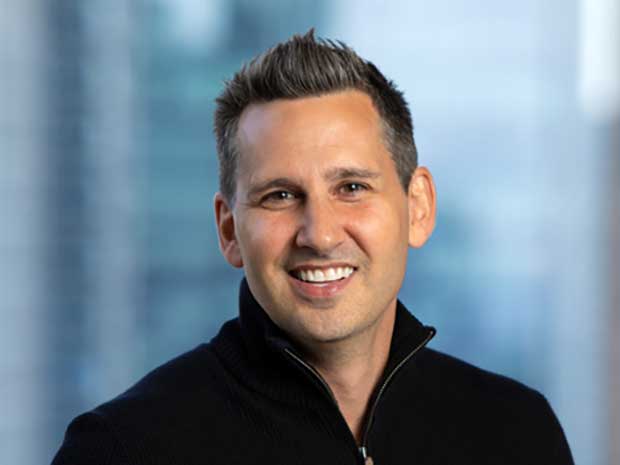 Joe KaczmarekPartner, Fintech Leader, Specialty Finance Leader, FS Assurance Leader
Related insights
Related services
RSM Luca: Human insights powered by technology
See how RSM Luca enriches your audit experience